How to Fix a Squeaky Office Chair Easily at Home?

Time:2026-05-11 Author:Aria
0%

A squeaky office chair can be more than just a nuisance; it can impact your productivity and focus. According to Emily Johnson, an expert in furniture repair, "Fixing a squeaky chair not only enhances comfort but also extends its life." If you’re looking for ways to solve this issue, you might wonder how to fix a squeaky office chair at home.

Many people experience this problem without knowing they're not alone. Squeaks often arise from worn-out components or lack of lubrication. You might not have the right tools, or the process could seem overwhelming. However, understanding the basic causes can lead you on the path to fixing it.

In most cases, a simple application of lubricant can do wonders. While other repairs might need more effort, starting with basic maintenance is essential. A little patience and attention to your chair's details can eliminate those irritating sounds. You might not get it perfect on the first try. Reflection on what works best is key to achieving a quieter chair.
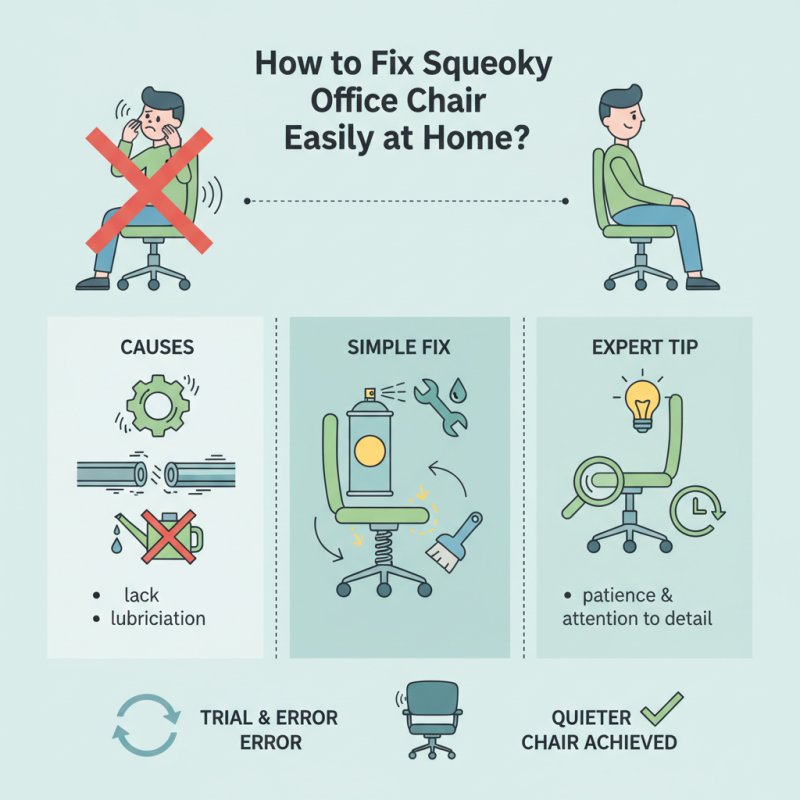
How to Fix a Squeaky Office Chair Easily at Home?

Identify the Source of the Squeak in Your Office Chair

To tackle the squeaky sound in your office chair, you must first identify where it's coming from. Listen closely while moving the chair. Is the noise from the wheels, the seat, or the backrest? Each part can create different sounds. Knowing the source helps pinpoint the best solution.

If your chair squeaks when you move, the wheels might need lubrication. Apply a few drops of WD-40 or a similar lubricant. Be careful not to overdo it; just a little goes a long way. For squeaks from the seat, try tightening any loose screws. You might need a simple screwdriver to fix this.

When addressing a backrest squeak, check the hinges or any moving parts. Dust and grime can contribute to the squeak, so cleaning these areas can also help. Regular maintenance is key. Inspect your chair every few months. Tackling these small issues can prolong the chair's life, saving you money in the long run.

Keep in mind that sometimes, the squeak may persist despite your efforts. It may indicate wear and tear that needs further inspection. An honest assessment of your chair's condition is necessary.

Gather Necessary Tools and Materials for Repair

To fix a squeaky office chair, gathering the right tools and materials is crucial. You don’t need a toolbox full of equipment. A few simple items will work wonders. Start with a lubricant, like WD-40 or silicone spray. These are effective in tackling squeaks. A soft cloth will help clean the area. You might need a screwdriver for tightening screws.

Keep in mind that even the simplest repairs can have unexpected challenges. Sometimes, you might discover a screw is stripped or a wheel is stuck. Don’t be discouraged. Take your time to identify the problem. If you need extra help, online videos can be beneficial.

Tips: Always test the chair after applying lubricant. Check for any residual noise. If squeaking persists, consider rechecking all screws. They may need tightening. Also, be mindful of the chair's surface; dirt can contribute to squeaks. Regular maintenance can prevent future issues, ensuring comfort during long hours of work.

Lubricate Moving Parts to Eliminate Squeaking

Squeaky office chairs can be a source of irritation, disrupting your focus and productivity. To tackle this issue effectively, it’s important to understand the role of lubrication. Lubricating the moving parts of your chair is often a straightforward solution. Identify the areas that produce noise, such as the wheel bases, pivot points, and height adjustment mechanisms.


Using a suitable lubricant can make a significant difference. Apply the lubricant evenly to squeaky joints and wheels. Don’t skimp on the detail; make sure to get into tight spaces where noise may be originating. Sometimes, a gentle wipe of a cloth can help distribute the lubricant effectively.


It’s worth noting that too much lubricant can attract dust and dirt. This buildup can lead to further squeaking over time, creating a cycle of frustration. Finding a balance is key. You might need to reflect on your chair's condition. If it continues to squeak despite your efforts, a more in-depth inspection might be necessary. Understanding your chair's mechanics can lead to better maintenance in the future.

Tighten Loose Screws and Bolts for Stability

A squeaky office chair can disrupt your focus. One of the main culprits of this noise is loose screws and bolts. According to the American Society of Interior Designers (ASID), maintaining a stable workspace boosts productivity by up to 25%. Addressing loose components can greatly enhance your chair's overall function.

Start by examining all visible screws and bolts. Use a suitable screwdriver or wrench for tightening. If you don’t have the right tools, consider borrowing them. A study from the Ergonomics in Design journal found that chairs lacking proper maintenance can lead to discomfort and decreased work efficiency. Tightening those components can eliminate annoying noises while offering necessary support.

If your chair still squeaks after tightening, inspect the joints. Friction from movement can cause wear. Applying lubricant to squeaky sections may help. However, be wary: over-lubricating can lead to more issues, creating a sticky mess. A balanced approach is key. Regular maintenance ensures your chair remains a supportive fixture in your workspace. Don't overlook the significance of a stable, quiet chair—it’s essential for a productive environment.

Test the Chair After Repairs to Ensure Squeak is Gone

After repairing your squeaky office chair, it's crucial to test it. Sit down gently and shift your weight to see if the squeak is gone. Pay attention to any creaking or popping sounds. If you hear it again, you may need to reassess your repairs.

When checking for noise, turn the chair in circles. This motion often reveals overlooked problems. Week-by-week monitoring helps prevent future issues. A quiet chair enhances your focus and productivity.

Tips: Keep WD-40 or silicone spray on hand. These can address squeaks quickly if they return. Regularly check the bolts and screws to ensure everything stays tight. Over time, movement can loosen them, leading to irritating sounds.

Reflect on the experience. Perhaps you missed a joint while repairing. It's okay to revisit and refine your approach. Learning is part of fixing things at home.

How to Fix a Squeaky Office Chair Easily at Home? - Test the Chair After Repairs to Ensure Squeak is Gone

Repair Method Required Materials Steps Estimated Time Effectiveness Rating
Lubrication WD-40 or silicone spray 1. Tilt the chair. 2. Apply lubricant to squeaky parts. 10 minutes 4/5
Tightening Screws Screwdriver 1. Locate screws. 2. Tighten them with a screwdriver. 5 minutes 5/5
Replacing Wheels New chair wheels 1. Remove old wheels. 2. Install new wheels. 15 minutes 5/5
Applying Wax Furniture wax 1. Clean the area. 2. Apply wax to squeaky spots. 10 minutes 3/5

FAQS

: How can I identify the source of the squeak in my office chair?

: Listen carefully while moving the chair. Check if the noise comes from the wheels, seat, or backrest.

What should I do if the wheels of my chair squeak?

Lubricate the wheels with a small amount of lubricant. Be cautious not to overapply it.

How can I fix squeaks coming from the seat?

Tighten any loose screws using a screwdriver. This can help eliminate the noise effectively.

What if the backrest of my chair squeaks?

Check the hinges or moving parts. Clean any dust to reduce the squeaking sound.

Can I prevent squeaks with regular maintenance?

Yes, inspect your chair every few months. Regular checks can prolong its life and overall performance.

What should I do if the squeak persists after my repairs?

It may signal wear and tear. Reflect on your chair's condition and consider a more detailed inspection.

Is using too much lubricant a bad idea?

Yes, excess lubricant can attract dust and create more issues. Find a careful balance when applying.

Do loose screws affect my chair’s performance?

Absolutely. Loose screws can disrupt stability and cause annoying noises.

How important is it to address a squeaky chair?

A quiet chair enhances focus and productivity. Ignoring it can lead to a less efficient workspace.

What if I don't have the right tools to tighten screws?

Consider borrowing tools. Proper maintenance is crucial for a comfortable and functional chair.

Conclusion

If you're wondering how to fix a squeaky office chair at home, start by identifying the source of the squeak. This could be caused by moving parts or loose screws and bolts. Once you've pinpointed the problem, gather the necessary tools and materials for the repair process.

Applying lubricant to the moving parts is crucial to eliminate any annoying noises. Additionally, make sure to tighten any loose screws and bolts to enhance the chair's stability. After completing these steps, test the chair thoroughly to confirm that the squeaking has been resolved. Following these straightforward methods will help you enjoy a quieter workspace in no time.

Aria

Aria

Aria is a dedicated marketing professional with a deep passion for innovative strategies and a keen understanding of our company's product offerings. With a wealth of experience in the industry, Aria excels at crafting engaging content that highlights the unique features and benefits of our......