WorkX Chair
Choosing an ergonomic chair manufacturer is not just a matter of comparing prices or attractive product photos. The maker’s choices affect how a chair feels after a full workday, how its adjustments hold up, and whether replacement parts remain available. Small details matter. A smooth height lever, firm stitching, and a stable five-star base can reveal more than polished marketing language.
How to identify high-quality ergonomic chair manufacturers starts with checking evidence, not promises. Look for clear material specifications, documented quality-control processes, and test results that apply to the actual chair models being considered. Ask how the manufacturer evaluates seat foam, armrest mechanisms, tilt controls, and frame durability. Reliable companies should explain these details plainly and provide consistent answers. Vague claims deserve a closer look.
Experience also helps buyers judge whether a supplier understands everyday use. Request product samples, inspect adjustment ranges, and ask how warranty claims and spare-part orders are handled. If possible, gather feedback from people who use the chairs for several hours each day. Their comments may reveal issues a showroom test misses. No checklist is perfect. Even a reputable manufacturer can make a product that does not suit every body or workspace. This guide introduces practical ways to assess expertise, product consistency, service, and transparency before making a purchasing decision.
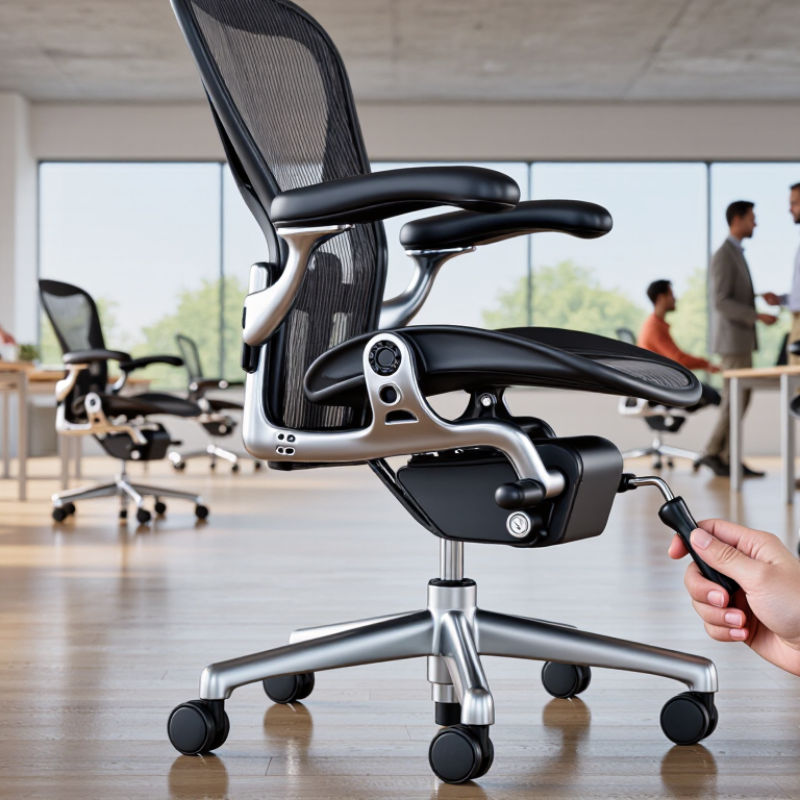
A capable manufacturer starts with the people who will use the chair, not a standard body shape. ISO 9241-5:1998 addresses workstation layout and postural requirements. Apply its principles by documenting users’ height ranges, tasks, sitting duration, and movement needs. A short-term visitor chair and a chair for an eight-hour shift serve different demands.
Measure the actual workstation. Record desk height, screen position, keyboard reach, and available floor space. Check whether users can place their feet flat, keep shoulders relaxed, and reach controls without twisting.
EU-OSHA’s 2022 OSH Pulse survey found that about three in five workers reported work-related musculoskeletal disorders. That figure does not prove a chair caused discomfort, but it makes user fit worth investigating.
Ask manufacturers how their designs accommodate varied users and changing tasks. Request adjustment ranges, load testing methods, and evidence from trials with people resembling your workforce. A seat that looks adjustable may still lack useful depth range. Small detail. Test chairs at the real desks, with real users, over several work sessions. I would also record discomfort, though self-reports can be inconsistent. No specification sheet captures every habit, and that gap deserves honest review.
EN 1335 divides office chairs into Types A, B and C according to dimensional requirements. These are not quality grades. Type A generally accommodates a broader range of body sizes through wider adjustment ranges; Type B offers a more moderate range, while Type C has more limited dimensional adjustability. Exact requirements depend on the chair’s dimensions and the applicable edition of the standard.
Compare the figures that affect fit: seat height, seat depth, usable seat width, backrest dimensions and armrest spacing. A chair may have a wide seat but still leave a shorter user’s feet dangling if its minimum seat height is too high. Check how far the seat slides forward and back, too. Small differences matter. A few centimetres can change whether the backrest supports the lower back or presses against it. Ask the manufacturer for a dimensioned specification sheet and verify the stated EN 1335 type against the relevant standard. Do not assume Type A means every measurement is larger, or that one type suits every user. I would still want to test the adjustment controls in person; a table cannot reveal a stiff lever or an awkward fit.
How to Identify a High Quality Ergonomic Chair Manufacturer
Verify Structural Safety Testing Against ANSI/BIFMA X5.1
A polished chair can still hide weak joints or an unstable base. Ask the manufacturer for a complete test report against the applicable edition of ANSI/BIFMA X5.1. This standard covers safety and durability tests for general-purpose office chairs. Check that the report names the exact chair model and configuration you plan to buy. A report for a similar-looking model is not enough. Look for test methods, results, and the laboratory’s name. If the report is unclear, request clarification.
Useful details include how the chair performed in stability, strength, and durability testing. Confirm that the tested version matches the product’s base, mechanism, and other load-bearing parts. Ask whether the laboratory is accredited for the relevant testing, and whether any failures led to design changes and retesting. Don’t rely on a logo or a one-line “tested” claim. Reports can be technically valid yet difficult to interpret; that is a fair reason to ask for supporting documentation.
Tips: Request the full report, not just a certificate. Compare model numbers carefully. Ask questions when details are missing.
| Evaluation Area | Evidence to Request | What to Verify | Signs of a Credible Result |
|---|---|---|---|
| Standard and edition | Complete test report identifying the standard and edition used. | Confirm the evaluation is against ANSI/BIFMA X5.1 for general-purpose office chairs, and check that the edition is appropriate for the procurement requirement. | The report names the standard and edition clearly. Any deviations, exclusions, or substitutions are disclosed rather than presented as full compliance. |
| Chair configuration | Tested-product description, photographs, drawings, and model or configuration identifiers. | Match the tested chair to the chair being offered, including its base, casters or glides, seat, back, armrests, mechanism, and adjustment options. | Key components and configuration are traceable. Differences between the tested sample and production model are documented and assessed. |
| Structural strength | Results for applicable strength tests, including relevant seat, backrest, and armrest evaluations. | Check that the report covers the chair’s applicable load-bearing components and records the procedure, observations, and outcome for each test. | Results are reported against the applicable acceptance criteria in the cited edition. A summary statement alone is not used in place of test details. |
| Durability | Reports for applicable cyclic or repeated-use tests on the seat, back, and chair mechanisms. | Verify that the tested components represent the offered design and that test completion, failures, repairs, and retests are recorded. | Test records identify the sample and outcome, with any failure or corrective action clearly documented. The report does not omit unsuccessful runs. |
| Stability | Applicable stability test results for the chair configuration. | Check whether the test addresses relevant tipping directions and chair features, such as recline or adjustable components, where applicable under the standard. | The report states which stability procedures were performed and records the observed result and applicable acceptance criteria. |
| Base, casters, and glides | Test results and component details for the chair base and floor-contact parts. | Confirm that the tested base and casters or glides match the production specification. Check that applicable strength, durability, and stability evaluations are included. | Component materials and configuration are identifiable, and the report links the results to the complete chair rather than to an unrelated component sample. |
| Test laboratory and traceability | Laboratory identification, report number, test dates, sample identification, and authorized report approval. | Check that the report is complete and attributable to a laboratory capable of conducting the relevant tests. Ask the laboratory to confirm authenticity when needed. | Report details are consistent, pages and results are complete, and the tested sample can be traced to the product specification and production controls. |
| Production consistency | Quality-control records, inspection plans, and change-control procedures. | Ask how the manufacturer controls materials, suppliers, assembly, and changes that could affect structural performance after testing. | Changes to critical components trigger documented review and, where appropriate, additional testing. Production units are checked against approved specifications. |
| Report limitations | Scope statement, exclusions, nonconformities, and corrective-action records. | Look for statements limiting the report to a sample, configuration, or specific test scope. Confirm that no required applicable test is missing. | Limitations are transparent, and corrective actions are supported by documented follow-up evidence rather than unsupported assurances. |
Verification note: ANSI/BIFMA X5.1 test requirements and procedures depend on the applicable edition and chair configuration. Request the complete report and compare its scope with the exact product being purchased; do not treat an unspecified “BIFMA tested” claim as proof that every applicable requirement was met.
A high-quality ergonomic chair manufacturer should explain how each adjustment supports a real user, not merely list features. Request adjustment ranges, fitting instructions, and test information for moving parts. Details matter. For seat fit, leave two or three finger widths between the seat edge and the backs of your knees. A seat that is too deep can press behind the knees; one that is too short may leave the thighs unsupported.
The backrest should support the lower back without forcing a fixed posture. Look for adjustable lumbar height or depth, plus a back that follows modest changes in position. Armrests should let shoulders relax while elbows stay near the body; check whether they adjust in width and height, not height alone. Set chair height so both feet rest flat and knees sit near hip level. If a manufacturer gives only one height range, ask how it suits shorter and taller users.
Tilt should allow controlled reclining, with resistance tuned to the user’s weight and a lock that engages reliably. Test it in ordinary clothes, at a desk, for several minutes—not only in a showroom pose. Fit varies by body and task, so no single setting proves comfort. Ask how sample chairs are evaluated and whether adjustment points stay secure after repeated use. This offers evidence beyond polished product claims.
Assess adjustability across five fit points: seat, back, arms, height, and tilt.
How to use this chart: The scores are an illustrative example, not measured manufacturer data. When evaluating a chair, check that the seat supports your thighs without pressing behind your knees, the backrest supports your lower back, the armrests let your shoulders relax, the seat height lets your feet rest flat, and the tilt allows comfortable recline.
Audit materials and quality controls before judging a chair by appearance. EU-OSHA’s review of European workplace data reported that roughly three in five workers experience musculoskeletal disorders. That figure does not prove a chair prevents pain, but it shows why fit and durability deserve scrutiny. Ask for foam-density specifications, fabric abrasion results, and material traceability. Request the actual test reports, not just a logo on a brochure.
Look for testing against the current ANSI/BIFMA X5.1 standard for office chairs. Its durability protocols include repeated seat and backrest loading, with specific cycle requirements. Check that reports identify the tested model and configuration; a similar-looking sample may use different components. Ask how incoming parts, welds, fasteners, and finished chairs are inspected, and how defects are recorded by production lot. Small details matter. A smooth showroom sample tells little about consistency across a shipment.
Read warranty terms line by line. Confirm coverage periods for upholstery, foam, mechanisms, and gas lifts, plus exclusions for normal wear and commercial use. Ask who pays freight and whether replacement parts remain available. A long warranty sounds reassuring, but vague terms can leave practical gaps. One detail is easy to overlook: request the claims process in writing, including response times. No factory is flawless; clear corrective-action records are more convincing than claims of zero defects.
It should show test methods, results, the laboratory, and the exact chair model. Ask for the full report. A certificate alone is thin evidence.
Similar chairs may have different bases, mechanisms, or load-bearing parts. Compare model numbers and configurations carefully. Small differences matter.
Review stability, strength, and durability results. Check how the seat and backrest performed under repeated loading. Look for clear results.
Ask how workers inspect incoming parts, welds, fasteners, and finished chairs. Request records showing how defects are tracked by production lot. Showroom samples can mislead.
Ask for foam-density specifications, fabric abrasion results, and material traceability. Request the actual reports, not just brochure claims. Details help.
No. Testing can provide evidence about safety and durability, but it does not prove a chair prevents pain. Fit still matters.
Confirm coverage for upholstery, foam, mechanisms, and gas lifts. Check exclusions, commercial-use terms, freight costs, and replacement-part availability. Read every line.
Ask for corrective-action records and the claims process in writing. Response times should be clear. No factory is flawless, and that deserves reflection.
How to identify high-quality ergonomic chair manufacturers begins with understanding who will use the chair and how it will fit the workstation. Use ISO 9241-5 as a reference for evaluating the relationship between users, tasks, and workspaces, then compare chair dimensions with the three office-chair types described in EN 1335. This helps determine whether the chair’s size and range of adjustment are suitable for its intended users.
Next, review structural safety testing against ANSI/BIFMA X5.1 and assess five essential fit points: seat, backrest, armrests, height, and tilt. A reliable manufacturer should also demonstrate consistent quality controls, provide clear information about materials, and offer warranty terms that explain coverage and support. Considering these factors together gives buyers a practical basis for comparing manufacturers and selecting chairs that support safe, comfortable, and adaptable everyday use.
