WorkX Chair
Choosing the right chair size is crucial for comfort and productivity. Poor chair selection can lead to discomfort and long-term health issues. According to a study by the Occupational Safety and Health Administration (OSHA), improper seating can contribute to musculoskeletal disorders in 60% of office workers. Understanding how to measure a person for the right chair size is essential in creating a safe and efficient workspace.
When assessing chair fit, consider the unique body dimensions of each individual. It’s not just about height; leg length and back support play significant roles too. Many people underestimate this, leading to suboptimal choices. The American National Standards Institute (ANSI) provides guidelines that outline ergonomic standards. Adhering to these can improve overall well-being.
Moreover, it’s important to reflect on personal preferences. What works for one person may not be suitable for another. Regular reviews of chair ergonomics may be beneficial as body shapes and work tasks evolve. By prioritizing proper measurement, individuals can enhance their workplace experience significantly.
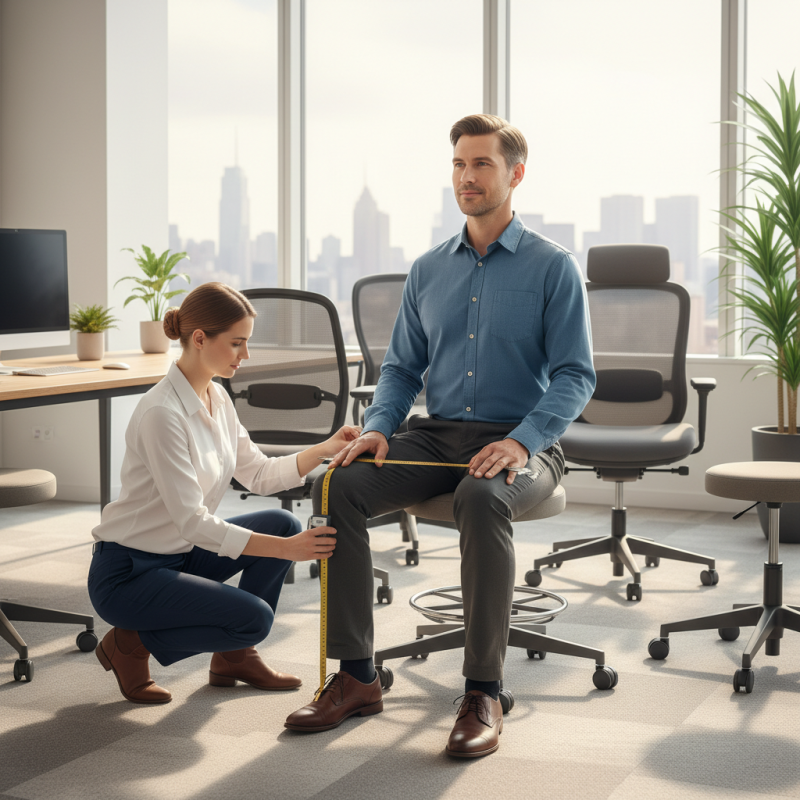
When selecting the right chair size, understanding its dimensions is crucial. According to the American National Standards Institute (ANSI), standard chair seat height ranges from 16 to 18 inches. This measurement suits most people. However, variations exist based on individual body types. Personalized measurements can lead to discomfort if not considered.
The average chair width is around 18 to 20 inches. Yet, this might feel cramped for larger users. A wider seat can offer better support and comfort. Furthermore, the depth of the seat typically falls between 16 to 20 inches, impacting sitting posture. A depth too shallow may lead to poor alignment, while one that's too deep can strain the legs.
Research from the Human Factors and Ergonomics Society suggests that an improper chair size can significantly affect productivity and health. Up to 90% of office workers report discomfort due to poor chair ergonomics. This is a stark reminder that dimensions matter. Measuring individuals accurately ensures they find a chair that truly fits their needs.
When choosing the right chair, essential measurements play a crucial role. Start with seat height; it should allow the user’s feet to rest flat on the floor. Measure from the floor to the top of the seat. A typical range is 16 to 21 inches. Ensure the chair isn’t too high or too low. An awkward seat can lead to discomfort and poor posture.
Next, consider seat depth. This measurement impacts back support. Ideally, the seat should allow a few inches between the back of the knees and the edge of the seat. Too deep can cause sliding, while too shallow lacks support. Measure from the backrest to the front of the seat. A depth of 15 to 18 inches usually works well for most individuals.
Don’t forget the armrest height and width. Armrests should support elbows comfortably without forcing shoulders up. Measure from the seat to the top of the armrest for proper height. For width, ensure there’s enough space to move freely without strain. These details ensure a better fit and enhance overall comfort, leading to improved productivity in your workspace.
Choosing the right chair size starts with
accurate seat height measurement. According
to the Human Factors and Ergonomics Society, the ideal seat height for most adults is
between 16 to 21 inches from the
floor. However, individual preferences can vary significantly. Some might find this range
uncomfortable, often due to leg length or mobility issues.
To measure seat height, first, have the person sit naturally on a flat surface. Their feet
should touch the ground. Use a measuring tape from the ground to the top of the thigh where
it meets the seat. This height helps determine the best chair fit. Note that variations may
occur due to different chair designs. A chair with a slightly adjustable height could
benefit those who fall between standard sizes.
Many people overlook the importance of seat depth.
The right seat depth allows users to sit back fully while keeping their feet flat. Industry
reports indicate that a seat depth of 15 to 18 inches
is common, but personal comfort can dictate adjustments. This often leads to
trial and error, where users must reflect
on each seating experience to find their ideal match. Adjusting chair features can mean the
difference between hours of comfort or discomfort.
When determining the perfect armrest height and width for a chair, it’s crucial to consider individual comfort. A well-measured armrest enhances support and promotes proper posture. Measure the distance from the floor to your elbow while seated. This helps establish an ideal armrest height. The armrests should not be too high or too low, as this can cause strain over time.
Width is another essential factor. Armrests should be wide enough to comfortably support the arms but not so wide that they restrict movement. As a general guideline, aim for a width that allows your arms to rest naturally. Some users may find themselves adjusting frequently if the width is off. This can lead to discomfort and even fatigue during extended periods of use.
Pay attention to your preferences. Everyone has different needs. It’s essential to spend time testing different sizes. Don’t rush the selection process. Take breaks to reassess your comfort level. If possible, seek advice from a professional who understands ergonomic principles. Proper measurement and consideration will lead to a chair that fits your unique body perfectly.
This chart illustrates the recommended armrest height and width based on different body types. The measurements are crucial for ensuring comfort and usability in seating arrangements.
Selecting the right backrest support is essential for comfort and health. Research shows that up to 85% of office workers experience back pain due to improper seating. The backrest supports the lumbar region, helping to maintain the natural curve of the spine. Proper measurements can lead to a more ergonomic fit.
To measure for backrest height, sit the user in an upright position. The lower back should meet the curved part of the chair's backrest. Ideally, this area should be 10-15 centimeters above the seat. A backrest that is too high can create discomfort. Conversely, one that's too low won't provide adequate support.
Backrest depth is equally important. The seat depth should allow the user to sit back comfortably without pressure on the back of the knees. A gap of about two to three fingers is recommended. A study by Chair Ergonomics Inc. found that 60% of users preferred a chair with adjustable backrest features. This flexibility accommodates different body types, making it more versatile. Regular adjustments are necessary to ensure ongoing comfort and support.
| Measurement Parameter | Recommended Size | Notes |
|---|---|---|
| Seat Height | 16-20 inches | Measure from floor to the underside of the knee. |
| Seat Depth | 15-20 inches | Sit back in the chair; there should be about 2-4 inches between the back of the knee and the chair edge. |
| Backrest Height | 12-18 inches above seat | Support should reach mid to upper back for optimal comfort. |
| Backrest Width | 18-24 inches | Should accommodate shoulder width comfortably. |
| Armrest Height | 7-10 inches above seat | Should allow relaxed and comfortable arm positioning. |
| Overall Chair Width | 24-30 inches | Consider space available in the intended area. |
: The seat height should allow feet to rest flat. Typically, this ranges from 16 to 21 inches.
Seat depth impacts back support. Aim for 15 to 18 inches to prevent sliding and ensure proper pressure on the legs.
Measure from the seat to your elbow while seated. This gives a good baseline for armrest height.
The width should allow natural resting of the arms. Too wide can restrict movement and cause discomfort.
If you find yourself adjusting frequently, the armrest width may not be appropriate and could lead to fatigue.
Spend time testing various sizes. Everyone has different needs. Take breaks to reassess how you feel.
Yes, a poorly measured chair can cause discomfort, poor posture, and strain over time.
Seek advice from someone familiar with ergonomic principles. Proper guidance helps in selecting an appropriate fit.
No, take your time. Rushing can lead to a poor fit and ongoing comfort issues.
Forgetting to check all measurements. Every detail matters for overall comfort and support.
In the pursuit of comfort and ergonomic support, understanding how to measure a person for the right chair size is essential. The article outlines the importance of chair sizes and dimensions, highlighting the key measurements necessary for an accurate fit. It emphasizes measuring seat height, armrest height and width, and the appropriate backrest support based on individual preferences and body measurements.
A step-by-step guide is provided to ensure that each measurement is taken correctly, aiding in the selection of a chair that promotes healthy posture and comfort. By following these guidelines, individuals can find the perfect chair that meets their specific needs, enhancing their overall experience whether at work or leisure. This approach to measuring ensures that the chosen chair not only fits well but also supports the user's well-being effectively.
