7 Best Ways to Stop an Office Chair from Rolling on Carpet?

Time:2026-10-27 Author:Amelia
0%

An office chair should move when you intend it to, not drift backward while you type. On carpet, small caster wheels meet resistance, compress the pile, and sometimes roll unevenly across seams. That movement can disturb your posture, strain your legs, and leave visible tracks beneath the desk.

So, how can you solve it safely? This guide explains How to stop an office chair from rolling on carpet through seven practical methods, including chair mats, replacement casters, wheel locks, and workspace adjustments. The right choice depends on carpet thickness, chair weight, floor condition, and how often you need to move.

Industry guidance supports a careful approach. ANSI/BIFMA chair standards address caster and base performance, but they do not guarantee smooth movement on every carpet. The Carpet and Rug Institute also recognizes chair mats as a practical way to protect carpet and improve chair mobility. Meanwhile, OSHA’s computer workstation guidance emphasizes stable equipment and neutral working positions, rather than forcing the user to fight a moving chair.

This matters more than it seems.

A thick-pile carpet may swallow small wheels. A thin mat may curl at the edges. Some replacement casters feel excellent at first, then collect fibers and become noisy. I have found that the cheapest solution is not always the most stable one.

The following methods compare installation effort, cost, carpet protection, and everyday control. They also identify when a fix may create a new problem, such as restricted movement or a raised seating height. Test one change at a time. Your floor, chair, and working habits may disagree with general advice.
7 Best Ways to Stop an Office Chair from Rolling on Carpet?

Understand Why Office Chairs Roll on Carpet

An office chair rolls on carpet because its casters are designed to move with light pressure. Carpet fibers bend under each wheel, then spring back and push the caster forward. Thick or low-pile carpet can also create small slopes around seams, worn paths, and furniture legs. When you shift your hips, the chair receives enough force to travel several inches. I once blamed loose casters, but the carpet itself was the bigger cause.

Seven practical fixes can reduce this movement.

Engage caster locks whenever the chair has them.
Replace smooth casters with locking, carpet-rated versions.
Non-rolling glides can work better for a fixed desk.
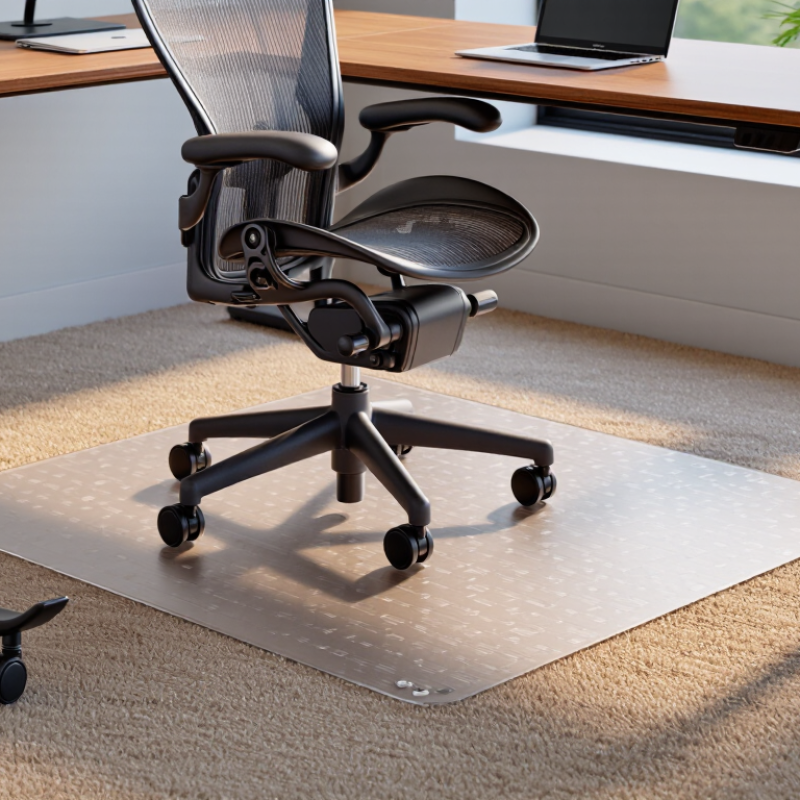
A rigid chair mat creates a flatter surface, while a rubber-backed mat resists sliding.
For extra grip, place an anti-slip underlay beneath the mat.
Caster cups can hold each wheel in position.
You can also keep both feet flat and avoid pushing off during sitting or standing.

Test one change at a time. A soft mat may feel stable at first, then shift after repeated chair movement. Cheap caster cups may crack under heavy loads. Check the chair base, wheel stems, and carpet edges before deciding on a solution. A damaged wheel can pull sideways and make rolling unpredictable. The best fix depends on carpet thickness, chair weight, and how often you need to move. Personally, I prefer a firm mat with locking casters, although even that setup needs occasional inspection.

Choose a Suitable Chair Mat or Carpet Gripper

A suitable chair mat can turn an unstable office chair into a controlled workstation.

Choose a mat designed for carpet, not a smooth-floor mat. Its underside should have small gripping studs that press gently into the carpet without tearing the fibers.

For low-pile carpet, a thinner polycarbonate or firm vinyl mat often works well. Thick carpet needs a stronger, longer-grip backing.

Measure the chair’s full movement area before buying. The mat should extend beyond the desk and allow the chair to roll backward without leaving its surface. A narrow mat creates an awkward edge, and the casters may catch it. Rounded corners can also reduce curling and accidental trips. Check the mat’s load rating, especially if the chair is heavy or has five wide casters.

A carpet gripper offers another option when a mat still slides. Place it flat beneath the mat, then press across the surface to remove air pockets. Clean dust from the carpet first. Dust weakens the grip.

I once used a gripper that felt secure for a week, but it shifted near the desk because the carpet was too plush. That mistake taught me to test one corner before covering the entire work area.

Avoid adhesive sheets unless their instructions clearly allow carpet use. They may leave residue or flatten delicate fibers. Recheck the edges after several days. Even a good mat can move when carpet compression changes.

Adjust the Chair’s Casters and Wheel Tension

A chair can roll too easily on carpet when its casters have low resistance or uneven tension.

I noticed this during long desk sessions: one rear wheel moved first, twisting the chair before I could sit comfortably. Start by lifting the chair and checking each caster. Remove carpet fibers, dust, and hair around the wheel axles. A small obstruction can make one wheel behave differently from the others.

Inspect the caster stems and mounting points for looseness. Tighten accessible bolts gently, but do not crush plastic parts. Some caster assemblies include a tension screw, brake tab, or resistance setting. Turn it in small increments, then test the chair on the same carpet. The ideal setting should slow unwanted movement without preventing normal repositioning. Too much resistance can strain the base when you pull the chair backward.

If the casters have no adjustment, replace only the faulty units with compatible, higher-resistance casters designed for carpet. Measure the stem size and check the wheel diameter before ordering. I once assumed all five casters matched, but one had a slightly different stem and sat unevenly. That mistake made the chair wobble. After adjustment, sit down carefully and shift your weight in several directions. Listen for clicking, watch for tilting, and retest after a few days. Carpet compresses under repeated use, so a setting that feels stable today may need another small correction later.

Secure the Chair with Brakes, Locks, or Wheel Stoppers

7 Best Ways to Stop an Office Chair from Rolling on Carpet?

A rolling chair can drift when carpet fibers compress under each caster. That movement strains your feet, hips, and lower back during desk work. OSHA’s Computer Workstations eTool recommends stable seating and proper workstation adjustment, but it does not replace physical wheel control. The U.S. Bureau of Labor Statistics reported 451,000 nonfatal workplace injuries involving falls, slips, and trips in 2022. A chair is not the only cause, but uncontrolled movement deserves attention.

Start with locking casters that engage when you sit down. They are practical for shared desks and need regular brake checks. Add removable wheel-lock sleeves when permanent caster replacement is inconvenient. Stopper cups work well on thick carpet because they hold each wheel in a shallow pocket. Wedge blocks can secure the front casters, while a low-profile anti-roll mat reduces sideways drift. Marking a parking zone also helps users leave the chair correctly. For a stronger setup, combine carpet-rated casters with mechanical locks.

Test every solution by pushing the chair from several angles. Check that the brake holds without lifting the caster. Inspect locks weekly for dust, cracks, and loose fittings. BIFMA seating standards emphasize stability testing, yet real carpet conditions vary widely. That is the part many guides miss. A stopper that works on short office carpet may fail on plush flooring. Use two controls when the chair supports frequent movement. Keep the aisle clear, too. A perfect lock cannot fix poor placement.

Apply a Stable Seating Setup for Long-Term Control

7 Best Ways to Stop an Office Chair from Rolling on Carpet?

Apply a Stable Seating Setup for Long-Term Control

A stable chair begins with controlled movement, not maximum mobility. Engage the caster brakes when available, or choose locking casters designed for carpet. Place a firm, low-profile chair mat over dense carpet, ensuring its edges lie flat. Add a non-slip underlay beneath the mat if it shifts during use. Check the five-star base for cracks, loose joints, or uneven contact. Small faults can create surprising movement.

Clean carpet fibers from the caster axles every week. Replace damaged wheels instead of forcing them across thick piles. Position the chair on a level section, away from sloped transitions and loose rugs. A wider base usually feels steadier, but it does not replace proper wheel control. Test the setup by sitting down, reaching forward, and standing slowly. It should resist sliding without trapping your feet.

Long-term seating control also protects working comfort. The U.S. Bureau of Labor Statistics reported 946,652 musculoskeletal disorder cases involving days away from work in 2022. That figure does not prove a rolling chair caused those injuries, but it shows why stable positioning deserves attention. OSHA’s ergonomic guidance supports keeping frequently used materials within easy reach, reducing repeated leaning and twisting. My practical mistake was trusting a thick mat alone; it softened the problem but still moved. Recheck the chair after cleaning, carpet changes, or floor rearrangement. Stability needs maintenance.

7 Best Ways to Stop an Office Chair from Rolling on Carpet

Compare these practical seating-control solutions by their expected stability, ease of installation, and suitability for long-term use on carpeted floors.

How to read the chart: Higher scores indicate better rolling control. A chair mat, caster cups, and braking casters provide strong control while preserving a comfortable seated setup. For maximum long-term stability, combine a low-friction barrier with a locking or stationary base.

FAQS

Why does an office chair roll on carpet?

Carpet fibers bend beneath each caster and push the wheel forward. Thick carpet creates tiny slopes near seams and furniture legs. Shifting your hips can move the chair several inches. The carpet may be the main cause.

Can cleaning the casters reduce unwanted movement?

Yes, remove hair, dust, and carpet fibers from each wheel axle. A small blockage can make one caster move differently. Lift the chair and inspect every wheel. Clean wheels matter.

How can I adjust caster resistance?

Check for a tension screw, brake tab, or resistance setting. Turn it slightly, then test the chair on the same carpet. Too much resistance can strain the chair base. Small changes work better.

What should I inspect before replacing the casters?

Check wheel diameter, stem size, mounting points, and chair-base condition. Tighten loose bolts gently without crushing plastic parts. A mismatched stem can cause wobbling. Measure carefully.

Which casters help keep a chair stable?

Locking, carpet-rated casters can reduce unwanted movement. Choose compatible units with suitable wheel sizes and stems. Test the brakes from different angles. One faulty wheel can pull sideways.

Are wheel stoppers useful on thick carpet?

Stopper cups hold each wheel inside a shallow pocket. They can work well on plush carpet. Cheap cups may crack under heavy loads. Inspect them regularly.

Can a chair mat prevent rolling?

A rigid mat creates a flatter surface over uneven carpet. A rubber-backed mat resists sliding. An anti-slip underlay can add more grip beneath the mat. Soft mats may shift later.

How should I test a solution?

Change one thing at a time and push the chair from several angles. Sit down carefully and shift your weight in different directions. Listen for clicking and watch for tilting. Retest after several days.

What habits reduce chair movement without new equipment?

Keep both feet flat while sitting down or standing. Avoid pushing off with your feet. Park the chair in a marked position. This helps, but it is not a complete fix.

Which solution is usually best?

The right choice depends on carpet thickness, chair weight, and movement frequency. A firm mat with locking casters often provides balanced control. Even that setup needs inspection. My preference may not fit every workspace.

Conclusion

If you are wondering how to stop an office chair from rolling on carpet, start by identifying the cause. Uneven carpet fibers, worn casters, excessive wheel movement, or an unstable seating position can all make a chair difficult to control. A properly sized chair mat or carpet gripper can create a firmer surface, reduce friction changes, and keep the chair within a defined area. Choosing a mat with a suitable thickness and textured underside can also improve stability without damaging the carpet.

For additional control, inspect and adjust the chair’s casters and wheel tension, removing dust or tangled fibers that may affect movement. Brakes, caster locks, or wheel stoppers can prevent unwanted rolling when the chair must remain in place. Finally, position the chair securely at a desk, keep the base level, and distribute your weight evenly while sitting. Combining these solutions creates a safer, more comfortable, and longer-lasting seating setup.

Amelia

Amelia

Amelia is a seasoned marketing professional with a wealth of expertise in our company’s core offerings. With an unwavering passion for driving growth and innovation, she plays a pivotal role in shaping our marketing strategies and enhancing brand visibility. A key aspect of her responsibilities......